
If you’ve ever wondered what’s actually going on inside your air conditioning system when it starts blowing cool air around your home or shop, you’re not alone. It’s one of the most common questions we get from homeowners and small business owners, especially during the first proper heatwave of the year.
Behind the scenes, there are a few key components working together. One of the most important is the evaporator coil. It might not be visible, but without it, your system simply wouldn’t cool the air. Let’s break down what it does, how it works and what to look out for if something isn’t quite right.
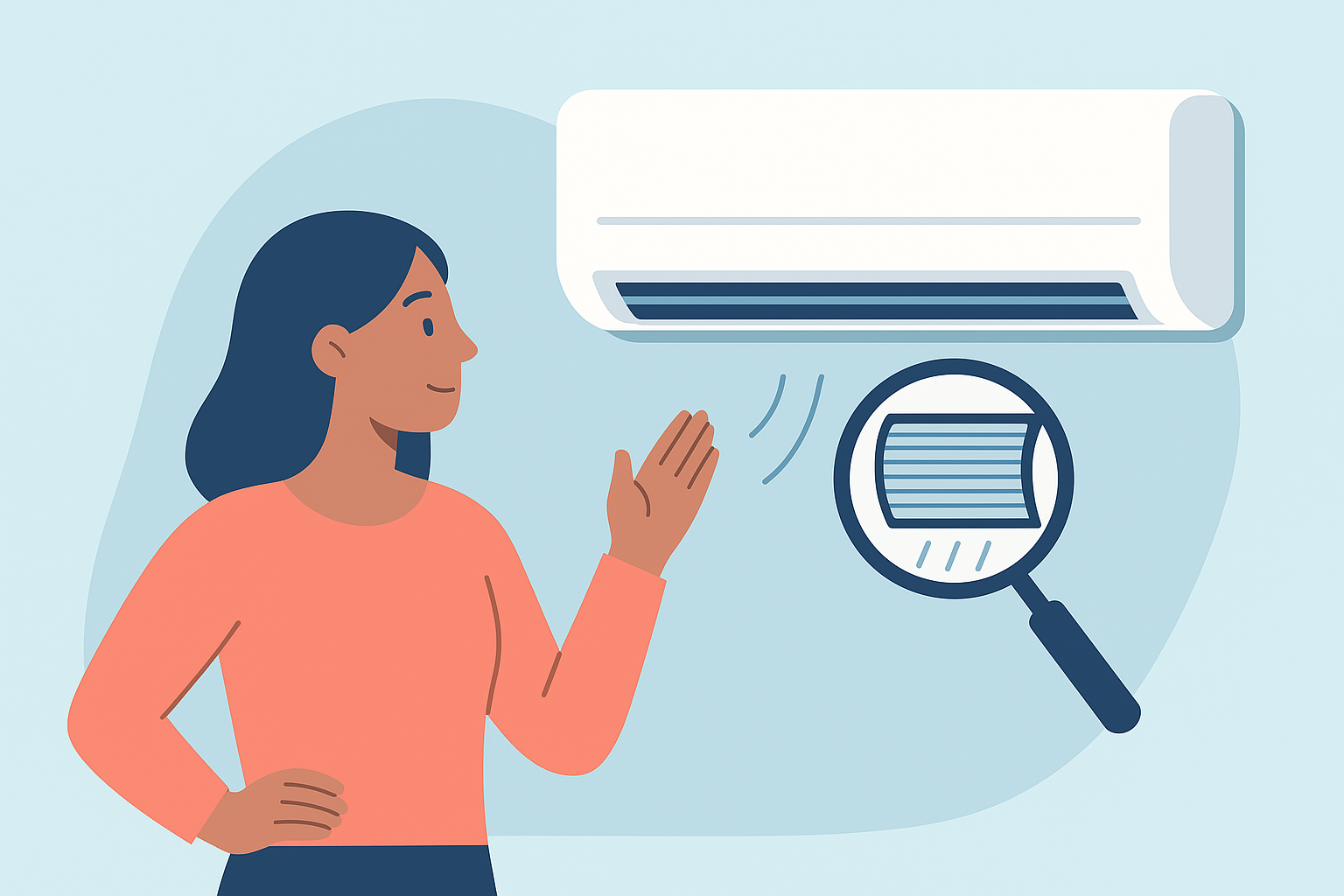
What Is an Evaporator Coil?
The evaporator coil is a part of your indoor unit, usually tucked away inside a wall mounted unit, ceiling cassette or above a suspended ceiling in offices and shops.
It’s made up of a network of small copper tubes and thin metal fins. These tubes carry refrigerant, which is the substance that actually absorbs heat from the air inside your building.
When people tell us, “The fan’s running but it’s not really cold,” this is often the first part we check. If the evaporator coil isn’t doing its job properly, you’ll feel the difference straight away.
In simple terms, the evaporator coil is the part of the system that makes the air cold before it’s blown back into the room.
How the Evaporator Coil Works in Air Conditioning Systems
To understand the evaporator coil, it helps to think about how heat is removed from a room.
Warm air from your room is pulled into the indoor unit and passed over the cold evaporator coil. Inside the coil, refrigerant is flowing at a very low temperature. As the warm air moves across it, the heat transfers from the air into the refrigerant.
Here’s what’s happening step by step:
- The thermostat calls for cooling.
- The system sends cold refrigerant into the evaporator coil.
- Warm indoor air blows over the coil.
- The refrigerant absorbs the heat and evaporates from liquid to gas.
- The cooled air is pushed back into the room.
That heat that’s been absorbed doesn’t just disappear. It’s carried outside to the condenser unit, where it’s released into the outdoor air.
This is why you’ll often feel warm air blowing from the external unit at the side of a house in places like Calne or Corsham. It’s the system moving unwanted heat out of the building.
The evaporator coil also removes moisture from the air. As warm air hits the cold coil, condensation forms, a bit like water droplets on a cold glass. That moisture drains away through a condensate pipe. This helps reduce humidity and makes rooms feel more comfortable, not just cooler.
Signs Your Evaporator Coil May Be Faulty
Like any working part, evaporator coils can develop issues over time. We often see problems in systems that haven’t been serviced regularly or where filters haven’t been cleaned.
Here are some common signs something may not be right:
- The air coming out doesn’t feel as cold as it used to.
- The system runs for longer than normal without reaching the set temperature.
- You notice ice forming on the indoor unit.
- There’s water leaking or dripping inside.
- The system switches off unexpectedly.
Ice on the coil is something we see quite a bit. It sounds odd, especially when you’re trying to cool a room, but it usually happens when there isn’t enough airflow, often due to a blocked filter, or if the refrigerant level is low.
A leaking evaporator coil is less common but can happen as systems age. If the refrigerant level drops because of a small leak, the system will struggle to cool properly and may need repair or, in some cases, coil replacement.
If you run a café, salon or small office, these issues can be more than just an inconvenience. Customers notice when it’s stuffy or humid. Staff do too.
Why Regular Maintenance of Your Evaporator Coil Matters
A lot of coil related problems are preventable with regular servicing.
Over time, dust and debris can build up on the coil’s fins. Even a thin layer of dirt acts like insulation, reducing its ability to absorb heat. That means your system has to work harder, which increases energy use and wear on other components.
Routine maintenance usually includes:
- Cleaning or replacing filters.
- Inspecting and gently cleaning the evaporator coil.
- Checking refrigerant levels.
- Clearing the condensate drain to prevent blockages.
In homes in Wiltshire, we often find that a simple clean and service makes a noticeable difference. The air feels fresher, the system runs more quietly and cooling is more consistent across rooms.
Regular checks also help spot small issues before they become expensive ones. A minor refrigerant leak caught early is far easier to deal with than a failed compressor caused by ongoing strain.
If you’re not sure when your system was last serviced, it’s worth checking. Even if it seems to be working fine, an annual inspection keeps the evaporator coil and the rest of the system in good shape.
The evaporator coil might not be the part you see every day, but it’s central to how your air conditioning performs. Understanding what it does helps you spot early warning signs and keep your system running efficiently for years to come. If you’d like straightforward advice from a local team that works on systems in homes and businesses across the area, AN Heating Services are always happy to help.
Contact us today to discuss your air conditioning system or get a quote for installation or servicing.