
If you’re looking at renewable heating solutions for your home, one of the biggest questions that comes up straight away is placement. Where exactly does a heat pump go? And does it really matter?
After fitting systems in everything from modern estates in Melksham to older stone cottages around Frome and Trowbridge, I can say with confidence that placement makes a huge difference. Get it right and you’ll have a system that runs quietly, efficiently and reliably for years. Get it wrong and you could end up with noise issues, lower performance and higher running costs.
Here’s what you need to know before deciding where your heat pump should be installed.
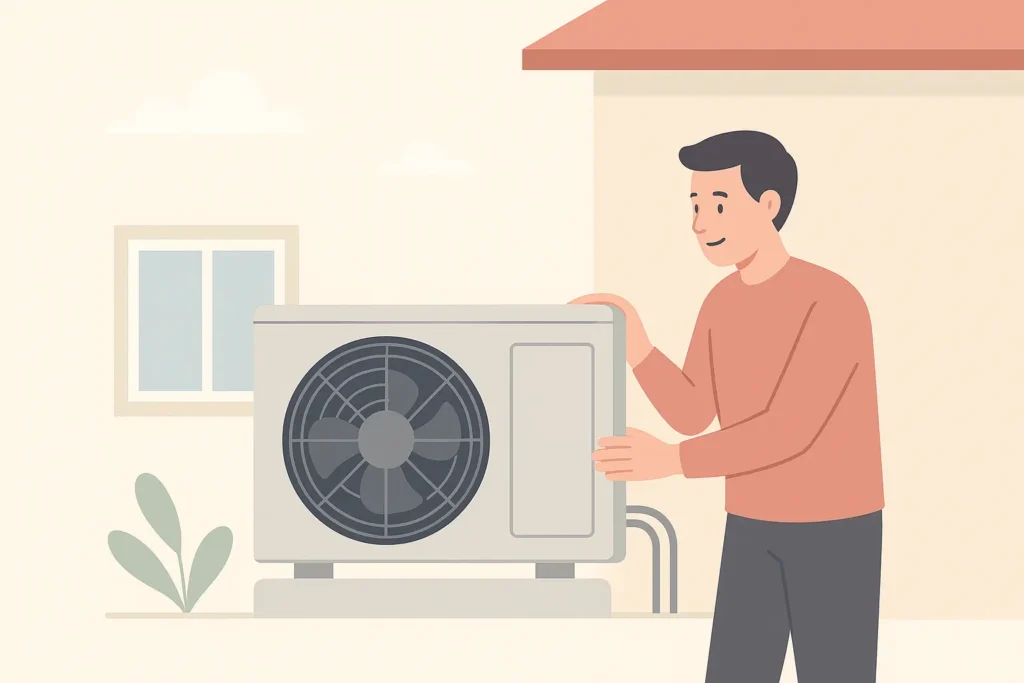
Why Heat Pump Placement Matters
A heat pump works by extracting heat from the air outside and transferring it indoors. For that process to be efficient, the unit needs good airflow, sensible pipe runs and proper clearances.
I often get asked, “Can’t you just put it wherever there’s space?” Technically, sometimes yes. Practically, not if you want it to perform properly.
Poor positioning can lead to:
- Reduced efficiency due to restricted airflow
- Unwanted vibration noise through walls or floors
- Frozen coils in winter because of blocked drainage
- Longer pipework runs that reduce system performance
Every home is different. A detached house in Trowbridge with a large garden gives you more flexibility than a tight side access terrace in Frome. That’s why proper planning is essential.
Best Locations for Installing a Heat Pump Indoors and Outdoors
Outdoor Unit Placement
For air source heat pumps, the outdoor unit is the main consideration. It needs open space around it so it can draw in and expel air freely.
The ideal spot is:
- On a solid base such as a concrete pad or specialist mounting brackets
- With at least 300mm clearance around the sides and more at the front
- Away from bedroom windows if possible
- In a location that allows simple pipe runs into the property
Many homeowners assume it has to go in the garden. In reality, we often install units along a side return, at the back of a property or occasionally at the front if planning rules permit and it makes practical sense.
We also look at drainage. In winter, a heat pump produces condensate water that has to go somewhere. If that water sits and freezes, it can cause issues. I’ve seen this in shaded corners where the sun never hits. A simple tweak in position usually avoids the problem.
Indoor Unit and Cylinder Placement
Inside the house, you’ll normally have a cylinder and potentially a hydraulic unit. This is often the part that surprises people because it does require space.
The cylinder typically goes:
- In an airing cupboard
- In a utility room
- In a garage if insulated properly
Compared to a combi boiler, a heat pump system needs more room. If you’re replacing an old system, we’ll assess whether your existing cupboard is large enough or if internal alterations might be worthwhile.
In homes around Melksham with modern layouts, utility rooms make life easier. In older cottages in Frome, space can be tighter so we sometimes have to be creative while still respecting airflow and access requirements.
Factors That Affect Heat Pump Placement in UK Homes
There’s no single perfect location that suits every property. Here are the main factors we consider when advising homeowners.
Property Type and Age
New builds tend to have clearer options. Older properties often have uneven ground, narrow access paths or solid stone walls that affect pipe routing. Thick walls can actually help reduce sound transmission, which is a bonus.
Noise Considerations
Modern heat pumps are far quieter than people expect. Even so, positioning away from bedroom windows or close neighbouring boundaries is sensible.
I usually stand with customers in their garden and say, “If this ran quietly here all night, would it bother you?” That practical conversation often settles the best spot.
Planning and Boundaries
Most installations fall under permitted development but they still have rules about distance from boundaries and property height. In built up areas of Trowbridge, for example, boundary proximity can influence positioning.
Pipe Run Length
The further the heat pump is from the cylinder, the longer the pipework. Longer runs can reduce efficiency and increase installation complexity. We always aim for the shortest sensible route while keeping disruption inside the home to a minimum.
Future Maintenance Access
Engineers need room to service the unit. I’ve seen systems boxed in so tightly that basic checks become awkward. A little forethought saves hassle later.
Common Mistakes to Avoid When Installing a Heat Pump
From experience, these are the main pitfalls homeowners should steer clear of.
- Placing the unit in a cramped corner with poor airflow
- Mounting directly to lightweight walls without vibration control
- Ignoring drainage and winter freezing risk
- Choosing a location based purely on hiding the unit from view
- Not considering access for servicing
I understand the desire to keep the garden looking tidy. But hiding the unit behind dense shrubs or fencing too closely can restrict airflow. It’s about balance. Smart placement can keep it discreet without compromising performance.
If you’re still weighing up whether a heat pump is right for your home, it’s worth reading about the broader benefits and considerations of air source systems before making a final decision.
Professional Advice and Next Steps
The best way to decide on placement is with a proper home survey. Every property has quirks. Slight slopes, hidden pipe routes, neighbour proximity and existing heating layouts all play a part.
If you’re based in Trowbridge, Frome or Melksham, local experience matters. Soil type, garden size and even how exposed your property is to wind can influence decisions. It’s not just about technical compliance. It’s about how the system will perform through a damp Wiltshire winter.
A well positioned heat pump should quietly get on with the job, delivering steady comfortable warmth without you giving it much thought.
If you’re considering upgrading your heating system and want honest, practical guidance tailored to your home, give us a call today. The team at AN Heating Services can assess your property and help you decide on the most efficient and sensible installation approach for the years ahead.