
If you are weighing up whether to stick with oil or move to one of the newer energy-efficient heat pump solutions, you are not alone. It is one of the most common conversations I have in kitchens and utility rooms across Wiltshire and Somerset at the moment.
Plenty of homeowners with ageing oil boilers are asking the same thing: do I replace like for like, or is now the time to switch? In this guide, I will break down how heat pumps and oil boilers compare in real, practical terms so you can make the right decision for your home.
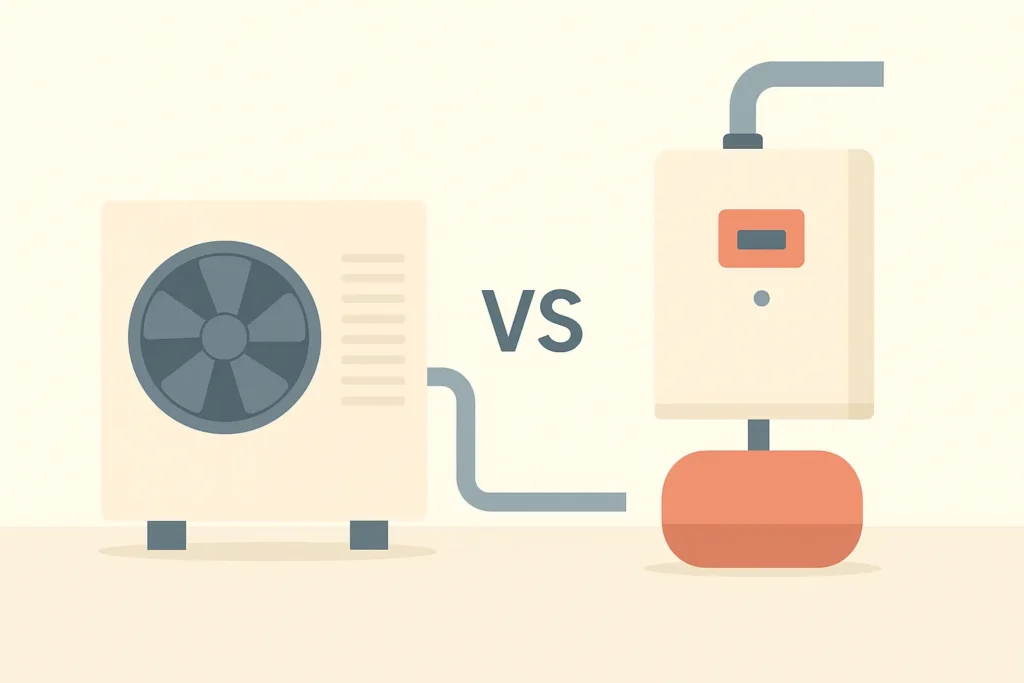
How heat pumps and oil boilers work
Oil boilers are fairly straightforward. They burn heating oil stored in a tank outside your property. That heat is transferred into water, which is pumped around your radiators or underfloor heating system. It is familiar technology and most engineers have worked on thousands of them.
The downside is that oil is a fossil fuel. You rely on deliveries and prices can swing quite a bit between winter and summer. I have seen customers in rural spots near Frome caught out by price spikes during cold spells.
Heat pumps, usually air source in our area, work differently. Instead of burning fuel, they extract heat from the outside air and use electricity to compress and raise that heat to a usable temperature for your home. Even when it feels cold outside, there is still usable heat energy in the air.
The key difference is that a heat pump moves heat rather than creating it by combustion. That simple shift changes running costs, efficiency and environmental impact quite significantly.
Cost comparison: installation, running and maintenance
Installation costs
An oil boiler swap is usually more straightforward if you already have a tank and pipework in place. In many cases, it is a case of removing the old boiler and fitting a new one in a day or two.
A heat pump installation can involve a bit more upfront work. Radiators may need upgrading and hot water cylinders are often changed to suit lower flow temperatures. Some properties also need electrical upgrades. In towns like Westbury and Chippenham, where house types vary from modern estates to older cottages, I always assess this on a case-by-case basis.
Running costs
This is where the conversation gets interesting. Oil prices are unpredictable. When global supply tightens, homeowners feel it straight away. You are also paying for fuel delivery and storage.
Heat pumps run on electricity but because they can produce several units of heat for every unit of electricity used, they can be significantly cheaper to run when set up correctly. The homes that benefit most are reasonably well insulated and designed to run at steady temperatures rather than constant on and off heating.
Maintenance
Oil boilers need annual servicing, nozzle changes and occasional attention to tanks and lines. I have dealt with everything from sludge in old tanks to frozen oil lines in January.
Heat pumps also need annual checks but there is no combustion, no flue gases and fewer moving parts under high stress. That often means fewer emergency breakdowns. It is not zero maintenance, but it is generally simpler.
Efficiency, environmental impact and long-term savings
In pure efficiency terms, oil boilers typically operate at under 100 percent efficiency because they burn fuel to create heat. A heat pump can achieve efficiencies well over 300 percent in practical terms because it is transferring heat rather than generating it.
Environmentally, oil is one of the higher carbon heating fuels used in UK homes. Every delivery represents more fossil fuel being burned. Heat pumps, especially as the UK electricity grid becomes greener, offer a lower carbon alternative.
Long term savings depend on the property. A well insulated home with good radiator sizing can see noticeable reductions in annual heating bills with a heat pump. In draughty older properties without upgrades, results are more mixed unless insulation improvements are done at the same time.
If you are in places like Westbury, Frome or Chippenham, where a lot of homes are off the gas grid, the comparison becomes even more relevant because oil has traditionally been the default choice.
Which option is right for your home?
There is no one size fits all answer and anyone who tells you otherwise is oversimplifying it.
An oil boiler might suit you if:
- Your current system works well and you want a straightforward replacement
- Your home has smaller radiators you do not want to change
- You prefer familiar technology and fuel storage on site
A heat pump is often a strong option if:
- Your oil boiler is reaching the end of its life
- You want lower carbon heating
- Your home is reasonably insulated or you are planning improvements
- You are thinking long term about running costs rather than just upfront spend
I often get asked whether heat pumps cope in winter. In my experience across Wiltshire and Somerset, modern systems sized correctly for the property handle typical UK winters just fine. The key is proper design. That means heat loss calculations, correct radiator sizing and careful setup, not guesswork.
Conclusion and next steps
Choosing between a heat pump and an oil boiler is about more than headline figures. It comes down to how your home is built, how you use your heating and what matters most to you over the next 10 to 15 years.
If you are unsure, the best step is to have your current system assessed properly. A good engineer will look at insulation levels, radiator sizes, hot water demand and your existing running costs before suggesting anything.
If you would like honest, practical advice specific to your home, speak to the team at AN Heating Services. You can get expert advice on upgrading your heating system and talk through your options without any pressure. Sometimes a like-for-like boiler swap is right. Sometimes a heat pump makes more sense. The important thing is choosing with clear information rather than guesswork.