
If you’re in Trowbridge and thinking about moving away from gas or oil, one of the first questions you’ll probably ask is this: “Can I connect a heat pump to my existing heating system, or does everything need ripping out and starting again?”
It’s a fair concern. Most homeowners we speak to want to improve efficiency without turning the house upside down. The good news is that in many cases, you can connect a heat pump to existing system components. But it does depend on what you’ve already got and how it’s been installed.
Let’s break it down properly so you can see what’s involved in a typical retrofit heat pump UK project and whether your home is likely to be suitable.
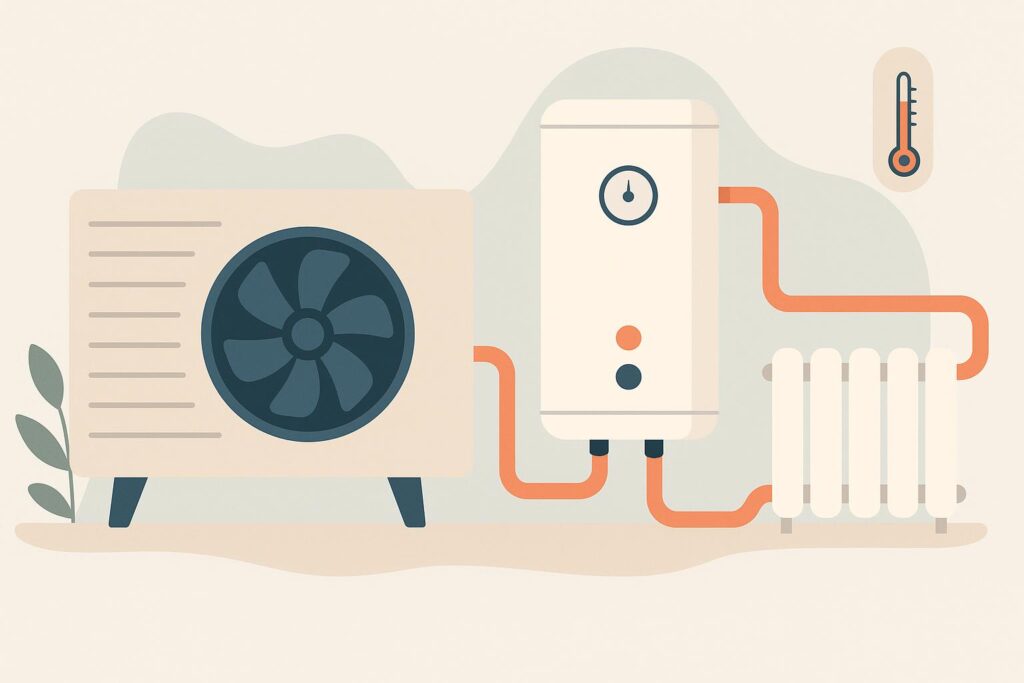
How Heat Pumps Work With Existing Systems
First things first, a heat pump doesn’t work in quite the same way as a traditional boiler. A gas boiler blasts out high temperature water very quickly. A heat pump delivers lower temperatures steadily over longer periods.
That difference is the key to understanding compatibility. Your existing pipework, radiators and controls might be perfectly usable. Or they might need adjusting to suit the lower flow temperatures of a heat pump.
When we carry out a retrofit heat pump UK installation, we look at:
- Condition and size of existing radiators
- Pipework diameter and layout
- Insulation levels in the property
- Hot water cylinder setup
- Available outdoor space for the unit
It’s rarely a case of everything out, everything new. In fact, many homes keep a large proportion of their existing heating system.
Can You Keep Your Radiators?
This is probably the most common worry. People imagine every radiator needs replacing.
The honest answer is sometimes yes, sometimes no. Heat pumps typically run at lower temperatures, so radiators need to be large enough to deliver the required heat output.
In some Trowbridge homes, especially newer builds, the existing radiators are already generous enough in size. In older properties, particularly Victorian terraces with single panel rads, upgrades are often needed in certain rooms.
That doesn’t mean the whole house needs new radiators. Often it’s a few key rooms like the lounge or main bedroom that require upsizing. We’ve also fitted larger radiators that barely look any different to the originals, so it’s not always disruptive or unsightly.
What About Underfloor Heating?
If you’ve already got underfloor heating, that’s excellent news. Heat pumps work very efficiently with underfloor systems because they operate at lower water temperatures by design.
If you’re planning a major renovation, some homeowners consider adding underfloor heating in certain areas during a retrofit heat pump UK upgrade. But it’s not a requirement.
Hybrid Systems: Keeping Your Existing Boiler
Some homeowners aren’t ready to remove their boiler entirely. That’s where hybrid systems come in.
A hybrid setup combines a heat pump with your existing gas or oil boiler. The heat pump covers most of the year, especially the milder days we’re used to in Wiltshire. The boiler only steps in during very cold spells or when there’s a sudden demand for high temperature water.
This can be a sensible stepping stone. It allows you to reduce carbon emissions and running costs while making use of existing equipment.
However, it does add complexity to the controls, and it still relies partly on fossil fuels. For some households that’s fine. For others, going fully electric makes more sense long term.
What’s Involved in a Proper Assessment?
No two homes are the same. A 1930s semi near the town centre behaves very differently from a stone cottage out towards the edge of Trowbridge.
A professional assessment isn’t just a quick look at your boiler cupboard. We carry out a full room by room heat loss calculation. That tells us how much heat each space actually needs on a cold winter’s day.
We also check:
- Loft insulation depth
- Cavity wall or solid wall makeup
- Double glazing quality
- Available electrical capacity
- Positioning for the outdoor unit including noise considerations
For example, we recently looked at a property where the boiler was oversized but the insulation had been quietly improved over the years. That meant the heat pump required was smaller than the homeowner expected once the calculations were done properly.
This is why a genuine retrofit heat pump UK installation is about design first, installation second.
What Does It Cost to Retrofit a Heat Pump?
Costs vary depending on how much of the existing system can remain.
If the radiators are suitable, the pipework is sound and insulation levels are decent, the installation is more straightforward. If several radiators need upgrading, or a new hot water cylinder is required, that does increase the overall investment.
The key thing is to look at it as a long term upgrade to your home. You’re not just replacing a boiler. You’re improving efficiency, reducing carbon emissions and future proofing your heating.
We always explain clearly what stays, what goes and why. There are no surprises halfway through the job.
Is My Home Suitable?
In most cases across Trowbridge and surrounding areas, yes, with the right design approach.
Older homes can absolutely work with heat pumps. They may need a bit more thought regarding radiator sizes or insulation improvements. Newer homes often adapt more easily.
The important thing is not to assume you need a full renovation before even asking the question. Many people are pleasantly surprised at how much of their current system can stay in place when we connect heat pumps to existing system components properly.
If you’re a homeowner in Trowbridge, Melksham, Westbury, Frome, Warminster or Chippenham and you’re wondering whether your current setup is compatible, the only reliable way to know is to have it assessed properly. At A N Heating Ltd – Heat Pump we look at the whole picture, not just the boiler on the wall. A N Heating Ltd – Heat Pump design systems around your property so you’re not over or under specified.
If you’d like clear, honest advice based on your actual home rather than guesswork, the next step is simple.