
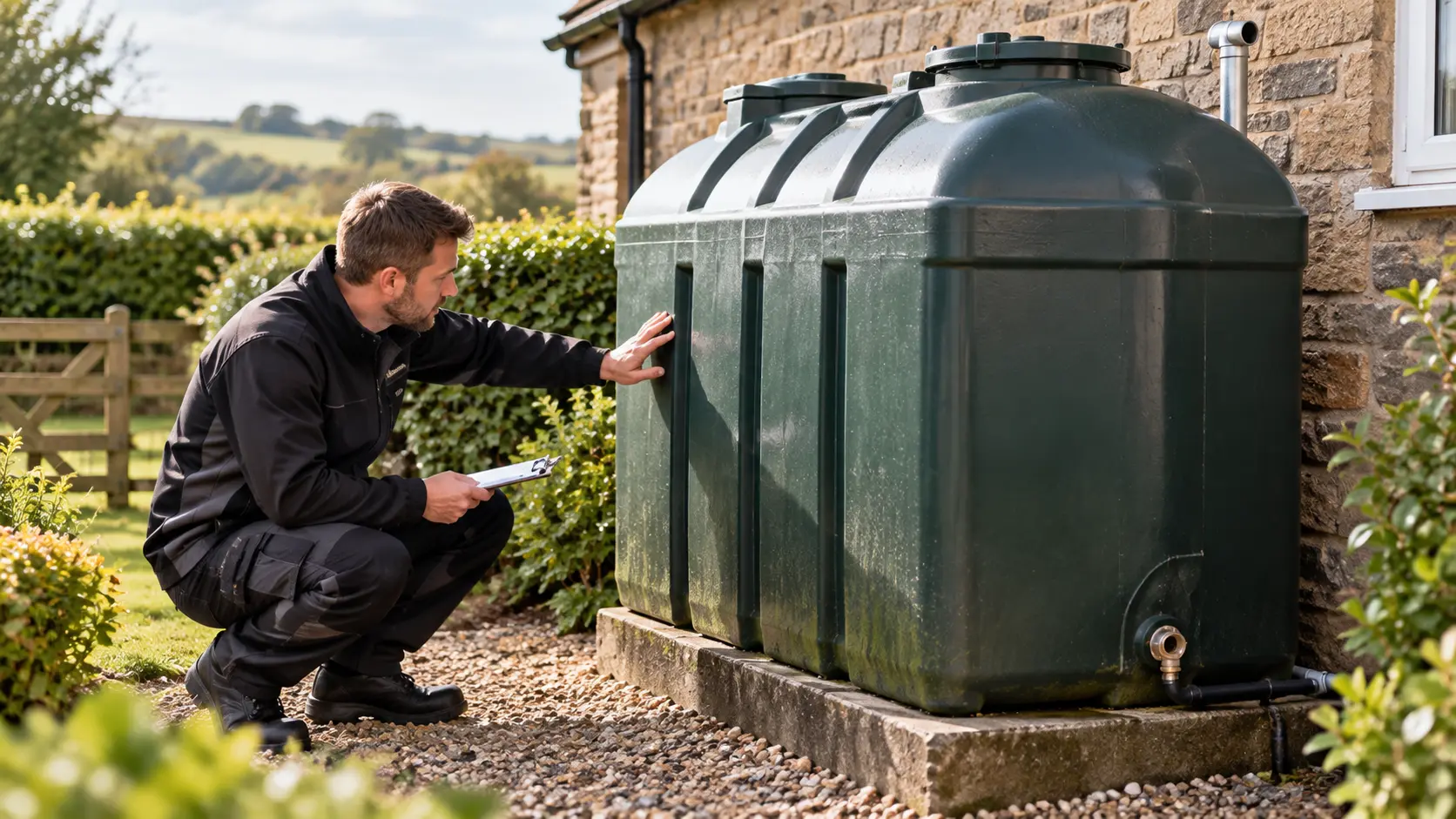
Oil tank maintenance mostly comes down to a few simple visual checks every month, plus an annual inspection from an OFTEC registered engineer to catch anything you can’t see from the outside. Left unchecked, a tank can develop leaks, corrosion or a failing bund, and by the time you notice a problem it’s often already cost you oil or caused damage to the surrounding area. A bit of regular attention keeps small issues small.
Why Oil Tank Maintenance Matters
An oil tank sits outside all year round, exposed to rain, frost and UV, so it takes more of a battering than most people realise. Plastic tanks can become brittle and crack over time, and steel tanks can corrode from the inside out where you’d never spot it just by looking. Regular checks mean problems get caught while they’re still a quick fix, not an emergency.
Monthly Checks You Can Do Yourself
These are all safe, straightforward checks that don’t involve opening up the tank or touching any pipework:
- Look over the outside of the tank for cracks, splits, or a build-up of algae that could be hiding damage underneath
- Check the gauge is working and giving a reading that matches what you’d expect based on recent usage
- Make sure the tank is sitting level and the base or stand hasn’t shifted or started to sink
- Check the area around the tank for any smell of oil or staining on the ground, which can point to a slow leak
- Confirm the vent pipe is clear and hasn’t been blocked by leaves, insects, or debris
Annual Checks Best Left to an Engineer
Some parts of an oil tank system need a trained eye and the right equipment to check properly. This includes the integrity of the tank itself, the condition of the bund (the secondary containment layer), the fuel line and filters, and the fittings and valves. If you spot anything on your monthly checks that concerns you, or it’s simply been a while since a professional looked at the system, it’s worth booking an inspection rather than guessing.
Signs Your Oil Tank Needs Attention
A few warning signs are worth acting on quickly rather than waiting for the next scheduled check. An oil smell near the tank, visible staining on the ground or the tank itself, a gauge reading that doesn’t match your usage, or a tank that looks like it’s tilting or sinking should all prompt a call to your engineer sooner rather than later.
How Long Do Oil Tanks Last?
Oil tanks don’t last forever, and how long yours holds up depends on the material, how exposed it is to the weather, and how well it’s been looked after. Regular maintenance won’t make a tank last indefinitely, but it does mean you’re far more likely to spot deterioration early and plan a replacement on your terms, rather than dealing with a sudden failure.
Common Questions About Oil Tank Maintenance
Does my oil tank need an annual service?
It’s good practice, yes. An annual check by an OFTEC registered engineer picks up on issues like corrosion, bund damage, or fittings wear that aren’t always obvious from a visual check alone.
What is a bund and why does it matter?
A bund is the outer containment layer around an oil tank, designed to catch any oil if the inner tank leaks. It’s a key safety feature, so any damage to it should be looked at promptly by a qualified engineer.
Can I top up or refill my own oil tank?
Arranging an oil delivery is fine, but if you notice any damage, leaks, or corrosion, that’s not something to deal with yourself. Get in touch with a registered engineer rather than attempting a repair.
If your tank’s due a check or you’d like an OFTEC registered engineer to take a proper look, our oil tank installation and maintenance team can help. And if you’re weighing up whether your current oil boiler needs replacing alongside the tank, our oil boiler installation page covers what’s involved.
Get in touch with our team for an oil tank inspection or to discuss any concerns about your current setup, as part of a service visit.