
If you’re weighing up your air conditioning solutions for your home, one of the first choices you’ll face is portable or wall-mounted. On the face of it, both promise cool air and relief during those sticky UK heatwaves. But in practice, they work very differently.
I’ve fitted systems in everything from newer estates in Calne to older stone cottages in Bradford On Avon and compact flats in Melksham. The right option depends less on what looks good in a brochure and more on how you use the room, how long you plan to stay in the property and what level of performance you actually expect.
Let’s break it down properly so you can make a confident decision.
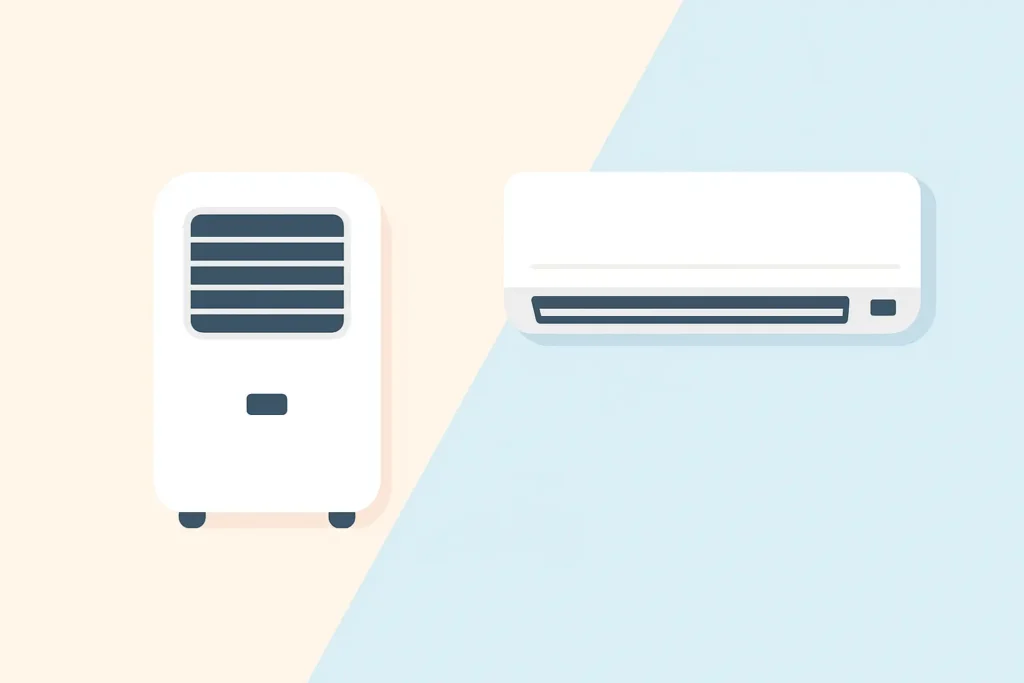
Introduction to portable and wall-mounted air conditioning
A portable air conditioning unit is a standalone appliance that sits on the floor. It usually has a hose that vents hot air out of a window. You plug it into a normal socket and wheel it into position.
A wall-mounted system, often called a split system, has an indoor unit fixed high on a wall and an outdoor unit that sits outside. The two are connected by pipework and installed professionally.
They both cool a space but that’s where the similarities end.
Key differences in performance, cost and installation
Performance is the biggest dividing line.
Portable units can take the edge off a warm room. Wall-mounted systems properly control temperature, lower humidity and maintain an even level of cooling.
Installation is another clear difference. Portable units are plug and play. Wall-mounted systems need professional installation, drilling through walls and siting the external unit correctly.
Cost-wise, portable units have a lower upfront price. Wall-mounted systems cost more initially but typically deliver better efficiency and longer lifespan.
In simple terms, portable is short-term and flexible. Wall-mounted is long-term and more robust.
Pros and cons of portable air conditioning units
Pros
- No installation work required
- Lower upfront cost
- Can be moved between rooms
- Good for renters or temporary use
Cons
- Noisier as all components are inside the room
- Less effective in larger spaces
- Window has to be left slightly open for the exhaust hose
- Often less energy efficient
I often get called out to homes in Melksham where someone has bought a portable unit during a hot spell and found it struggles upstairs. Bedrooms with low ceilings can end up feeling stuffy because the unit is fighting against warm air constantly coming in through the window gap.
They’re not useless. For a home office used a few days a week or a rented flat where you cannot alter the structure, they can make sense. Just keep expectations realistic.
Pros and cons of wall-mounted air conditioning systems
Pros
- Much stronger and more consistent cooling
- Quieter inside the room
- More energy efficient when sized correctly
- Can also provide heating in winter
- Adds value and comfort to the property
Cons
- Higher upfront installation cost
- Requires professional fitting
- Permanent fixture
In places like Bradford On Avon, where we deal with older buildings and awkward layouts, careful positioning is key. A well-installed wall-mounted system will quietly hold the room at whatever temperature you set, without that stop-start blast of cold air you get from cheaper units.
For family homes in Calne or modern estates in Melksham, wall-mounted systems are becoming far more common in kitchen diners and bedrooms. Once people have lived with one through a proper heatwave, they rarely go back.
Which option is best for different home types and needs?
If you’re renting or only need cooling for a short period each year, portable can be the practical choice. You avoid installation costs and can take the unit with you when you move.
If you own your home and plan to stay put, a wall-mounted system is usually the smarter investment. Especially if:
- You want to cool more than one room
- You struggle with overheating bedrooms at night
- You work from home and need steady temperatures
- You also want efficient heating in colder months
In larger living spaces, portable units often fall short. I’ve seen open plan extensions where a single split system handles the space comfortably, while two portable units barely make a difference and make twice the noise.
Energy efficiency and long-term running costs
This is where wall-mounted systems tend to pull ahead.
Modern split systems are designed to be energy efficient. Once the room reaches temperature, they modulate and tick over quietly rather than constantly switching on and off.
Portable units typically work harder to achieve less. Because the exhaust hose removes indoor air and pushes it outside, warm air is often drawn back in through gaps. That constant battle uses more electricity.
Over several summers, and especially if you use the heating function in winter, a properly installed wall-mounted system often proves better value overall.
Final comparison and expert recommendation
So, which is better?
If you need flexibility, low upfront cost and no installation, portable does the job.
If you want reliable performance, quieter operation and long-term efficiency, wall-mounted is in a different league.
From years of fitting and servicing both types, my honest view is this. For homeowners planning to stay in their property, wall-mounted air conditioning is usually the better all-round solution. Portable units have their place but they’re rarely a long-term answer.
If you’re still unsure, it helps to talk it through with someone who’s seen the common pitfalls in real homes. AN Heating Services regularly advises homeowners across Wiltshire on what will genuinely suit their space and usage.
Need help choosing the right system? Get expert advice here and have a proper conversation about what will work in your home.