
If you have a hot water cylinder tucked away in an airing cupboard, chances are you also have an immersion heater. A lot of people only notice it when the boiler stops working or the hot water runs cold. As someone who spends most days fitting boilers and carrying out professional boiler installations, I’m often asked whether an immersion heater is still needed and how it actually works.
This guide explains what an immersion heater is, how it fits into your hot water system and whether it’s the right setup for your home in places like Chippenham, Melksham or Trowbridge.
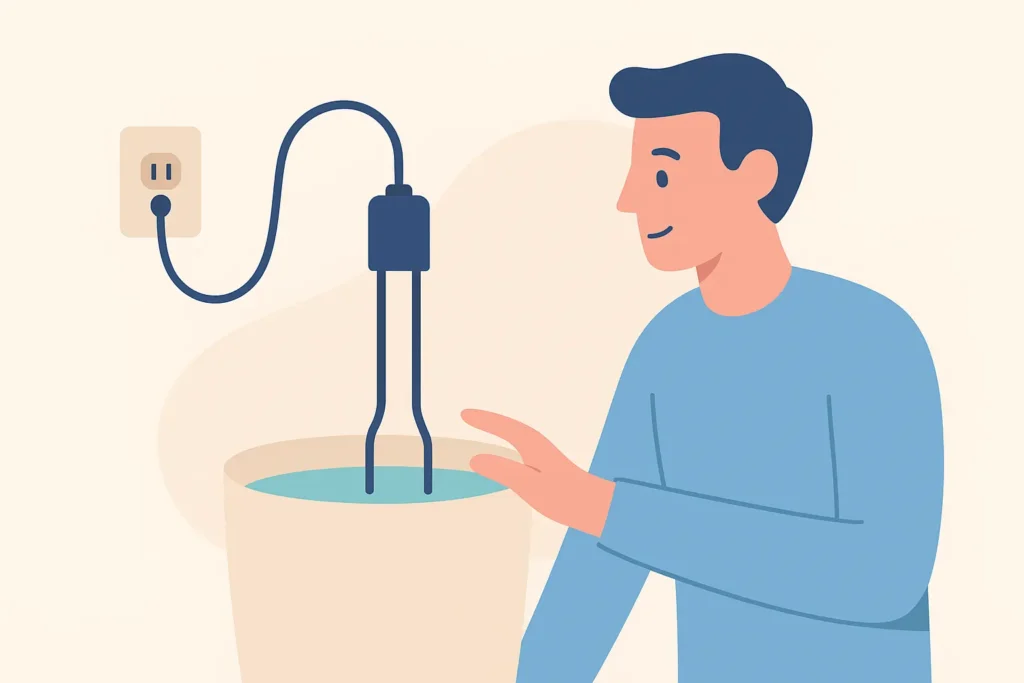
How immersion heaters work in your hot water system
An immersion heater is basically a large electric element that sits inside your hot water cylinder. Think of it like a giant kettle element. When you switch it on, electricity heats the metal element and that heat warms the surrounding water.
Most cylinders have one immersion heater near the bottom. Some older or larger tanks have two. The bottom one heats the whole cylinder. A top one, often called a boost, only heats the upper portion so you can get a smaller amount of hot water more quickly.
In traditional systems, the boiler does the main heating of the water via a coil inside the cylinder. The immersion heater is usually there as a backup. For example, if your gas boiler breaks down, you can switch on the immersion to keep hot water going while waiting for repairs.
In some properties, especially older flats or homes without gas, the immersion heater may be the primary way of heating water. These systems often work on off-peak tariffs such as Economy 7, heating water overnight when electricity is cheaper.
Pros and cons of using an immersion heater
The advantages
An immersion heater is simple and reliable. There are no moving parts inside the element itself, and if it’s wired correctly with a timer and thermostat, it can run for years without trouble.
- Great as a backup if your boiler stops working
- Simple to control with a timer or switch
- Useful in properties without a gas supply
I’ve had customers in Trowbridge whose boilers failed in the middle of winter. Being able to flick the immersion on meant at least they still had hot showers while we sorted the heating.
The downsides
The biggest drawback is running cost. Electricity is usually more expensive than gas per unit, so heating all your water using an immersion heater can cost noticeably more than using a modern gas boiler.
- Higher running costs compared to gas boilers
- Can be accidentally left on, racking up bills
- Slower to reheat a full tank compared to some modern systems
One common situation I see in Chippenham is a permanently switched-on immersion because the homeowner didn’t realise what the red switch did. It can make a surprising difference to the electricity bill.
When to repair, replace or upgrade your system
If you have no hot water and the boiler is working, the immersion heater could be the issue. Elements do burn out over time. Thermostats can also fail. In many cases, replacing the element is straightforward and much cheaper than replacing the whole cylinder.
However, if the cylinder is old, poorly insulated or starting to leak, it may be better to look at upgrading the system. Modern unvented cylinders are far more efficient and recover heat more quickly.
I often get asked by landlords in Melksham whether it’s worth keeping an immersion-only system in a rental. If tenants rely solely on electric hot water, it’s worth reviewing the long-term running costs and whether a gas boiler or renewable option would be more economical.
If you are unsure what type of system you have, understanding what a system boiler is can help you see how modern setups integrate hot water cylinders more efficiently.
Energy efficiency tips and running costs explained
If you do use an immersion heater, there are ways to keep costs under control.
- Use a timer so it only heats water when needed
- Set the thermostat to around 60°C which is hot enough for hygiene but not excessive
- Make sure the cylinder has a good quality insulation jacket
- Avoid leaving the boost function on permanently
In homes with Economy 7, it makes sense to heat the bulk of your water overnight. During the day, only top up if absolutely necessary. I’ve adjusted timers for plenty of households who were unknowingly heating water at peak daytime rates.
Also check for dripping hot taps or mixer valves passing. Constantly losing hot water means the system keeps reheating, and that pushes up energy use.
Alternatives to immersion heaters, including modern boilers
For many UK homes, a modern gas boiler remains the most cost-effective way to heat water. Combi boilers heat water on demand, so there’s no cylinder and usually no need for an immersion heater at all.
System boilers, paired with an insulated cylinder, offer strong water pressure and efficient recovery times. If you are considering upgrades in Chippenham, Melksham or Trowbridge, it is worth comparing modern boiler installations with older electric-only setups.
Some homeowners are also exploring renewable options such as heat pumps. These can work very efficiently with the right cylinder setup. You can find more background on different approaches to hot water and heating on out renewables page.
The best solution depends on the property, access to gas, insulation levels and how much hot water you actually use. A couple in a one-bed flat will have very different needs from a family of five with two bathrooms.
Conclusion and expert advice
An immersion heater is a straightforward electric element that heats water inside a cylinder. It’s reliable and useful as a backup, but it can be expensive to run if used as the main heat source without careful control.
If your current system is ageing, inefficient or confusing to operate, it may be time to review the bigger picture rather than just replacing another part. Getting the balance right between reliability and running cost is what really matters.
If you need clear, practical advice about your hot water or heating system, the team at AN Heating Services are always happy to talk it through. Need help with your hot water or heating system? Get expert advice and a free quote today